

ECC Restricts Import of Camera Smart Glasses Like Meta Ray-Ban
The ECC has approved restrictions on importing camera-enabled smart glasses and asked provinces to make workplace rules for their use.

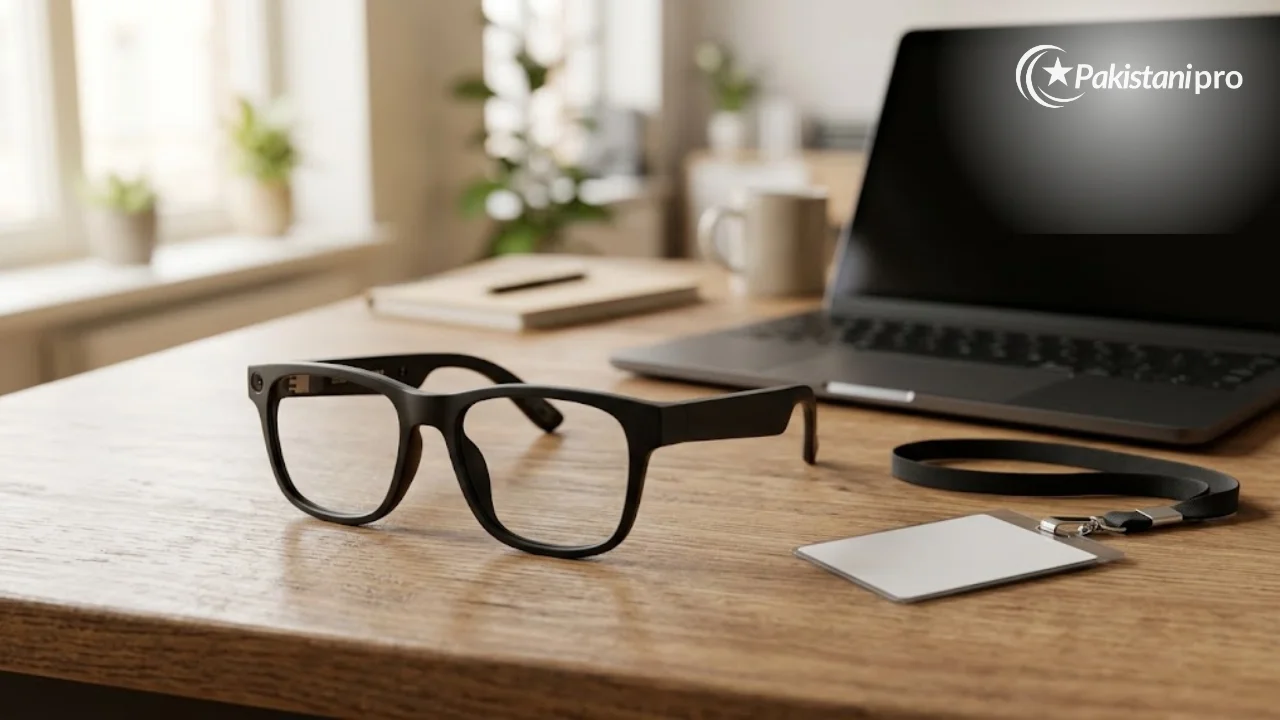
The Economic Coordination Committee (ECC) of the federal cabinet has approved restrictions on importing camera smart glasses, such as Meta’s Ray-Ban glasses, because of concerns about their use in workplaces. The decision was taken on 4 November 2026 at a meeting chaired by Finance Minister Muhammad Aurangzeb.
The ECC also recommended that the provinces and Islamabad Capital Territory make workplace regulations governing how such devices can be used.
Camera smart glasses decision at a glance
| Item | Detail |
|---|---|
| Decision | Restrictions on importing camera-enabled smart glasses |
| Taken by | Economic Coordination Committee (ECC) |
| Date | 4 November 2026 |
| Chaired by | Finance Minister Muhammad Aurangzeb |
| Reason given | Concerns about use in workplaces |
| Next step | Provinces and ICT to draft workplace regulations |
What are camera smart glasses?
Camera smart glasses look like normal spectacles or sunglasses but have a small built-in camera, microphones and speakers. Popular models can take photos and record video with a tap or voice command, stream live, and use AI assistants. A small light usually shows when recording, but people nearby often do not notice it.
Why the government is concerned
The official statement mentions workplace concerns. The main worries usually raised about such devices are:
- Recording colleagues, customers or confidential documents without permission.
- Privacy in offices, banks, hospitals and government buildings.
- Security of sensitive sites where phones are already restricted.
The issue was already under discussion: a petition seeking a ban on smart glasses was filed in the Lahore High Court in October 2026.
What is still not clear
The ECC statement does not say whether this is a complete ban or a licensing or approval requirement, from which date it applies, or what happens to glasses already in the country. The Federal Board of Revenue and the Ministry of Commerce will need to issue the formal import order. We will update this article when the notification is published.
What it means for you
- Buyers: avoid paying for imported smart glasses until the import rules are clear, as shipments may be held at customs.
- Owners: nothing in the ECC decision makes owning a pair illegal, but your office may soon set rules on using them.
- Employers: expect provincial workplace guidelines; until then, a simple internal policy on recording devices is sensible.
Other ECC decisions on 4 November
At the same meeting the ECC approved Rs 275 billion for water infrastructure, Rs 54 billion for ongoing defence projects, Rs 1 billion for gas supply to villages near gas fields, and revised tiers and markup for the PM Youth Business and Agriculture Loan Scheme, according to Radio Pakistan.
More tech news: TeamViewer security update, WhatsApp group chat features and PTA temporary mobile registration.
How other countries handle smart glasses
Pakistan is not the only place debating these devices. Many companies, hospitals, courts and exam centres around the world already ban recording devices on their premises, and some cinemas and gyms ask visitors to remove camera glasses. In Europe, data protection rules require people to be informed when they are recorded, which is why makers add a recording light. Pakistan’s approach of restricting imports and asking provinces to set workplace rules is stricter than most countries, which usually regulate use rather than sale.
Frequently asked questions
Are Meta smart glasses banned in Pakistan?
The ECC has approved restrictions on importing camera-enabled smart glasses. The formal import notification, which will say exactly how the restriction works, has not been published yet.
Is it illegal to use smart glasses I already own?
The ECC decision is about imports. Workplace rules will come from the provinces and ICT.
Why were smart glasses restricted?
The government cited concerns about their use in workplaces.
Sources: Radio Pakistan (ECC decisions, 4 November 2026); TechJuice (4 November 2026).